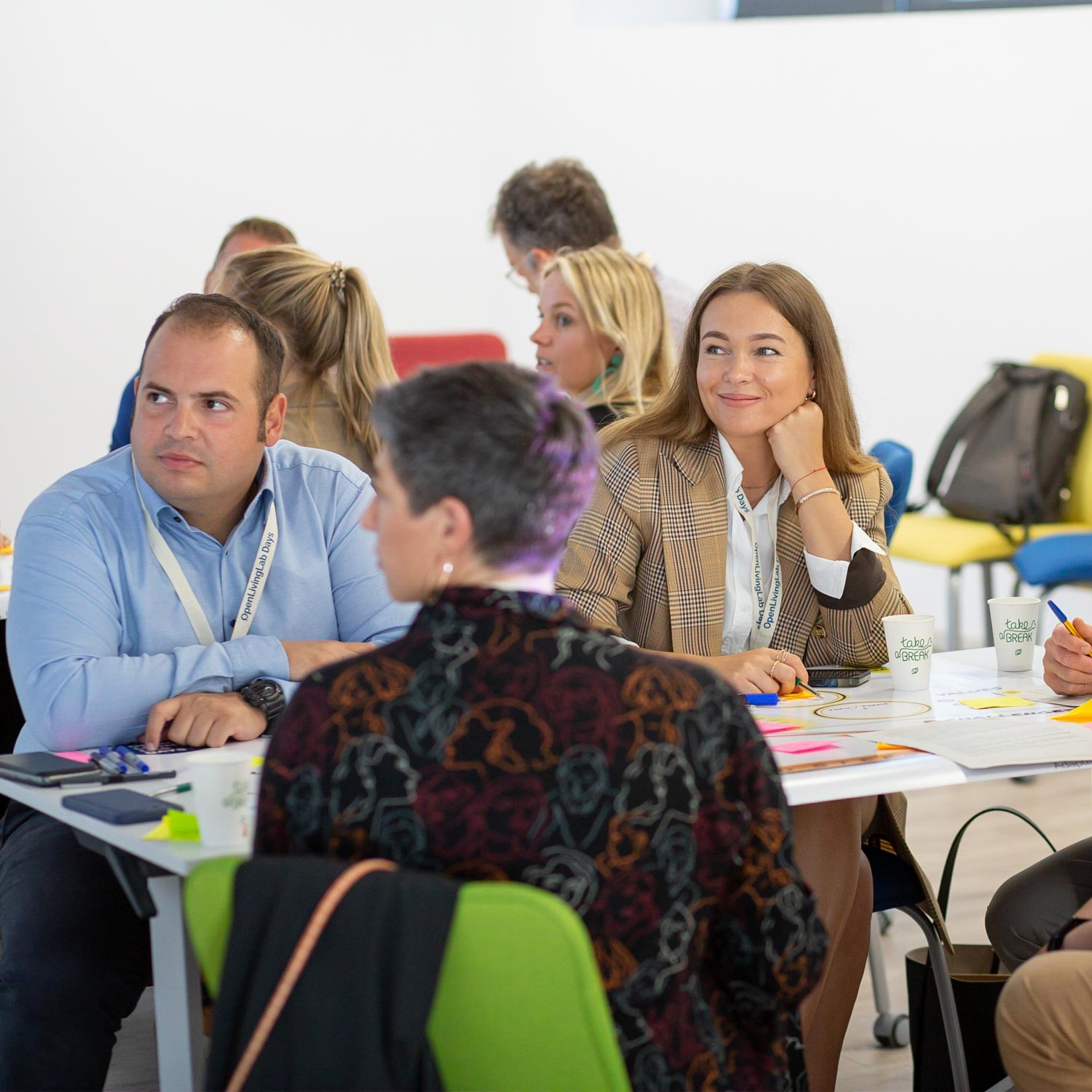

The workshop introduced the Living Lab Harmonized Allocation & Resource Tracking tool (LL HART), developed by the VITALISE project and adopted within the Living Lab Harmonization Framework. The tool combines the harmonized Living Lab services portfolio with resource allocation, helping Living Labs plan and monitor their activities more effectively.
Through practical examples and results from VITALISE, participants explored the tool’s potential value and were guided through its application in day-to-day Living Lab activities. The hands-on session included interactive exercises based on concrete scenarios, such as co-creation sessions, needs assessments, and small-scale piloting activities, allowing participants to experiment with planning and allocating resources using the tool.
The workshop highlighted the importance of a more systematic approach to resource planning in Living Labs, as discussions focused more on activities and outputs while overlooking the resources needed to deliver them. The session also revealed significant variation in planning practices across Living Labs, raising the need for common protocols and templates to support collaboration and comparability among Living Labs.
Resource estimates for the scenarios generated during the workshop broadly matched comparison data from the VITALISE project, suggesting that typical Living Lab activities may require 30-40 person-days of effort. This prompted discussion on a potential mismatch between the resource requirements of Living Lab service delivery and companies’ willingness to pay, particularly among SMEs and startups with limited financial and human resources.
Key observations included the need to define core Living Lab roles and establish resource estimation benchmarks for common activities. Participants also identified the potential value of standardized contract templates for collaboration with companies. While many Living Labs are increasingly interested in adopting a service-oriented approach, discussions indicated that operations remain strongly public-funded and project-driven.
Looking ahead, a more systematic collection of resource data at the service level is proposed to improve planning accuracy and benchmarking. Further actions include raising awareness of resource planning practices, promoting the LL HART tool, and organizing webinars or workshops to share experiences and support wider adoption across the Living Lab community.
Teemu Santonen, Despoina Petsani, Evdokimos Konstantinidis
Stay connected and inspired! Subscribe to our newsletter for the latest updates, insights, and innovations from our global community of Living Labs.