
ENoLL took part in the Smart City Expo World Congress in Barcelona as both an event partner and a session organiser. This annual conference brings together experts and representatives from across the world. Participants showcase their work, exchange perspectives and share expertise. In addition, they help shape more inclusive, sustainable and people-centred cities.
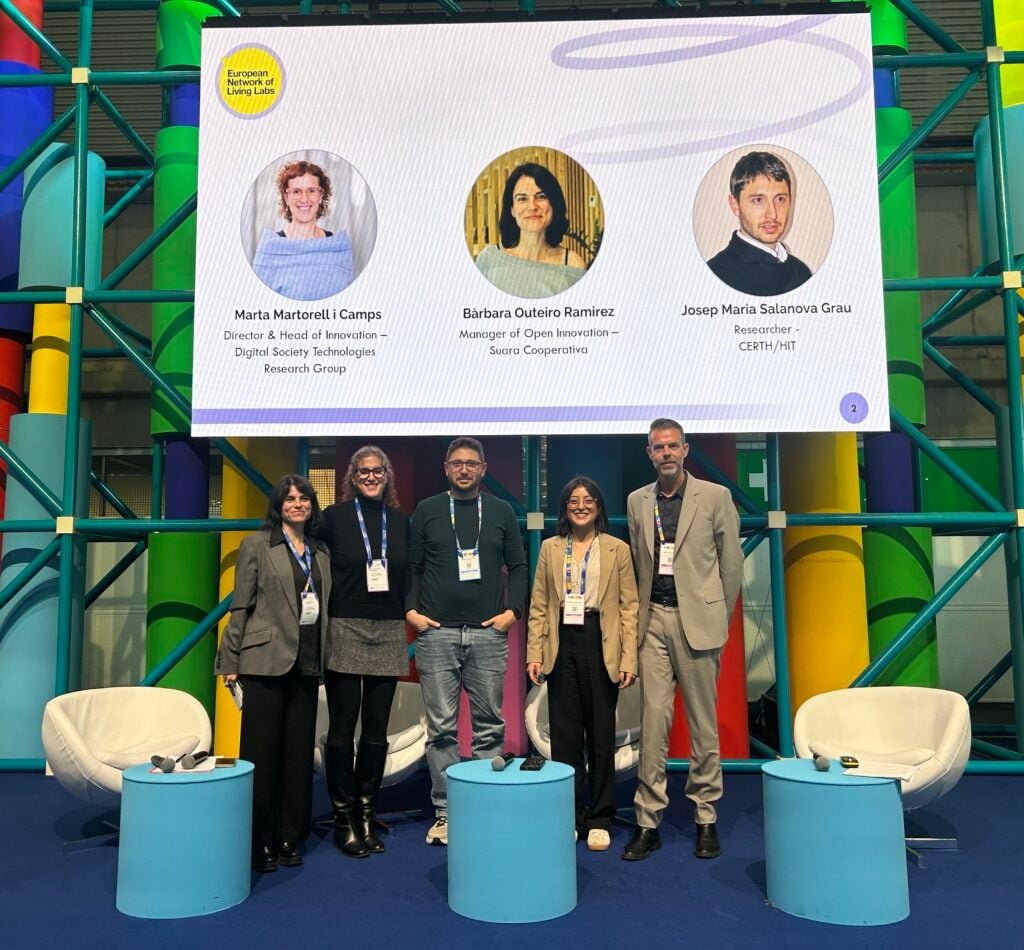
A key moment of ENoLL’s participation was the panel session “Smart Cities Through Smart Communities and the Role of Living Labs”. ENoLL’s Working Group on Digital Urban Systems and Solutions for Transitions (DUSST) organised it on 5 November. Michelle Gonzalez Torres, project manager at ENoLL, facilitated the session. Specifically, the discussion explored how communities can play a central role in shaping smart city innovations.
As cities increasingly adopt smart solutions, meaningful community involvement becomes essential. In fact, it helps ensure that technological innovation responds to local needs and creates lasting value. The panel therefore examined how Living Labs support this process. They do so through citizen participation, co-creation, local knowledge and collective intelligence. Moreover, speakers drew on practical experiences and real-world examples. In turn, they discussed how people-centred innovation can help cities become more inclusive and resilient in the long term.
The ENoLL delegation also included representatives from members Suara Cooperativa, i2CAT and THESSM@LL (CERTH). Each contributed their perspectives and experiences to the wider discussions on urban innovation and sustainable transitions.
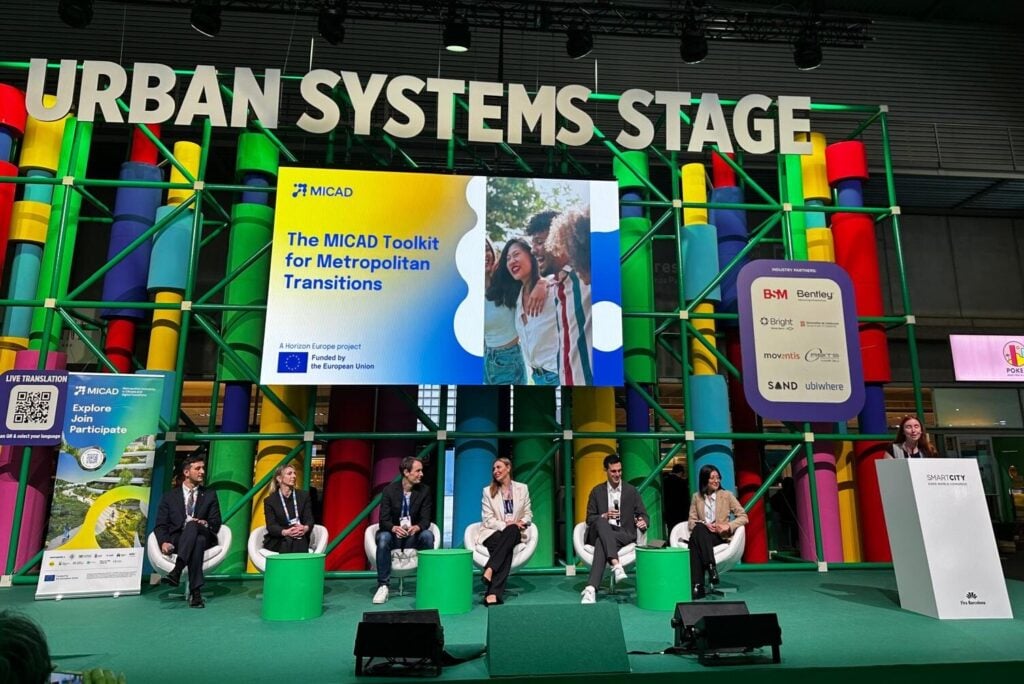
Beyond the panel, Michelle Gonzalez Torres also took part in “The MICAD Toolkit for Metropolitan Transitions” on 3 November. The MICAD project organised this session. It introduced the MICAD Toolkit, a practical resource for local and metropolitan authorities. The Toolkit supports them in developing inclusive climate and digital transition roadmaps.
As part of the presentation of the Toolkit’s tools and methodologies, Michelle presented the Stakeholder Engagement Methodology. In particular, she highlighted its role in fostering inclusive participation. Additionally, she showed how it supports collaborative decision-making throughout metropolitan transition processes. Overall, the session explored how cities and metropolitan areas can move beyond isolated smart city solutions. Instead, they can pursue more coordinated, participatory and integrated transformations.
ENoLL also took the opportunity to bring its community together. On 3 November, ENoLL members were invited to an informal networking meeting at the Slovak Pavilion. ENoLL member IoMobility Solutions hosted the gathering. It gave members the chance to reconnect and meet fellow Living Lab practitioners.
Ultimately, ENoLL’s participation at Smart City Expo World Congress reaffirmed the importance of connecting technological innovation with people, communities and places. Through its members, working groups and collaborative initiatives, ENoLL continues to champion the Living Lab approach. Above all, it promotes Living Labs as a key driver of inclusive and sustainable urban transitions.
Discover more about ENoLL’s activities and the DUSST Working Group.
Stay connected and inspired! Subscribe to our newsletter for the latest updates, insights, and innovations from our global community of Living Labs.