Europe’s ambition to achieve climate neutrality by 2050, and to enable the 100 Climate-Neutral and Smart Cities to reach this goal even earlier, cannot be realised by cities acting alone. While Climate City Contracts provide a shared vision and roadmap for local climate action, many of the systems that determine whether these ambitions succeed extend beyond municipal boundaries. Renewable energy production, logistics platforms, industrial zones, mobility corridors, water systems and natural ecosystems are often located in peri-urban territories, where cities and surrounding regions interconnect. As a result, climate neutrality can no longer be addressed within city limits alone – it requires a territorial approach, spanning urban and peri-urban systems.
Addressing challenges of this scale requires more than technological innovation. It calls for new ways of governing, experimenting and collaborating across sectors, disciplines and administrative boundaries. For more than two decades, the Living Lab methodology has demonstrated the value of bringing together public authorities, businesses, researchers and citizens to co-create, test and validate innovative solutions in real-life settings. By fostering collaboration, experimentation and user-centred innovation, Living Labs have become a well-established approach for tackling complex societal challenges. Today, they are increasingly recognised not only as spaces for innovation but also as governance mechanisms capable of supporting systemic transformation.
As these challenges become increasingly systemic, Living Labs are also evolving to operate at a broader territorial scale. Transition Super Living Labs (TSLLs) are regional Living Labs that apply the same principles of co-creation, real-life experimentation and multi-stakeholder collaboration across larger territories where multiple systems, sectors and governance levels interact. This broader scale makes them particularly well suited to addressing complex transitions, such as climate neutrality, that cannot be achieved by a single city or organisation acting alone.
ALTHEA applies this regional Living Lab approach to one of Europe’s most pressing challenges: accelerating climate neutrality in peri-urban territories. Through five Transition Super Living Labs in the Milan Metropolitan Region, Antwerp–Rotterdam, the Lisbon Metropolitan Region, the Alicante–Elche Functional Area and the Epirus–Ioannina Region, the project demonstrates how regional Living Labs can connect innovation, governance and stakeholder collaboration to accelerate systemic climate action. This work is complemented by three replicator regions – Greater Copenhagen, Gdynia and Aachen – which contribute their own experience while preparing to adapt and scale successful approaches within their territorial contexts.
An important milestone in this journey took place on 16–17 June, when project partners gathered in Milan, hosted by Regione Lombardia, to review progress as the project entered its implementation phase. More than a consortium meeting, the event demonstrated how TSLLs are translating a shared European vision into concrete action while creating opportunities for mutual learning and long-term collaboration.
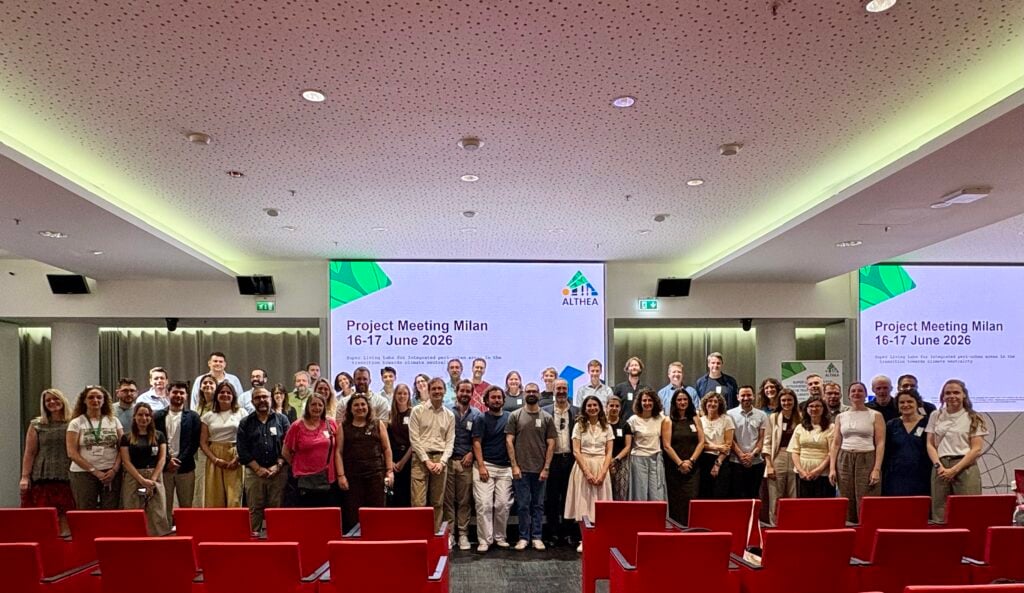
Eight months after its launch in November 2025, ALTHEA has established the common foundations that will guide implementation across its five Transition Super Living Labs. Discussions in Milan highlighted the progress made in developing the project’s methodological framework, including the Systemic Transition Blueprint, the Transition Readiness Assessment and the Digital Blueprint Toolkit. Together, these provide a shared approach for designing, implementing and evaluating systemic climate-neutral solutions while ensuring consistency across different territorial contexts.
The meeting also showcased the progress of ALTHEA’s portfolio of 21 innovations, addressing four complementary dimensions of climate neutrality: sustainable mobility, decarbonised energy systems, zero-pollution industry and cross-sectoral governance. Rather than testing isolated technologies, each TSLL combines several complementary innovations tailored to local priorities. Examples include industrial and logistics decarbonisation tools in the Milan Metropolitan Region, AI-supported mobility management and community energy solutions in Epirus–Ioannina, smart mobility planning and local energy communities in Alicante–Elche, innovative freight and commuter mobility services in Antwerp–Rotterdam, and multimodal accessibility and active mobility solutions in the Lisbon Metropolitan Region. As implementation accelerates, these innovations are progressively moving from development towards deployment in real-life environments.
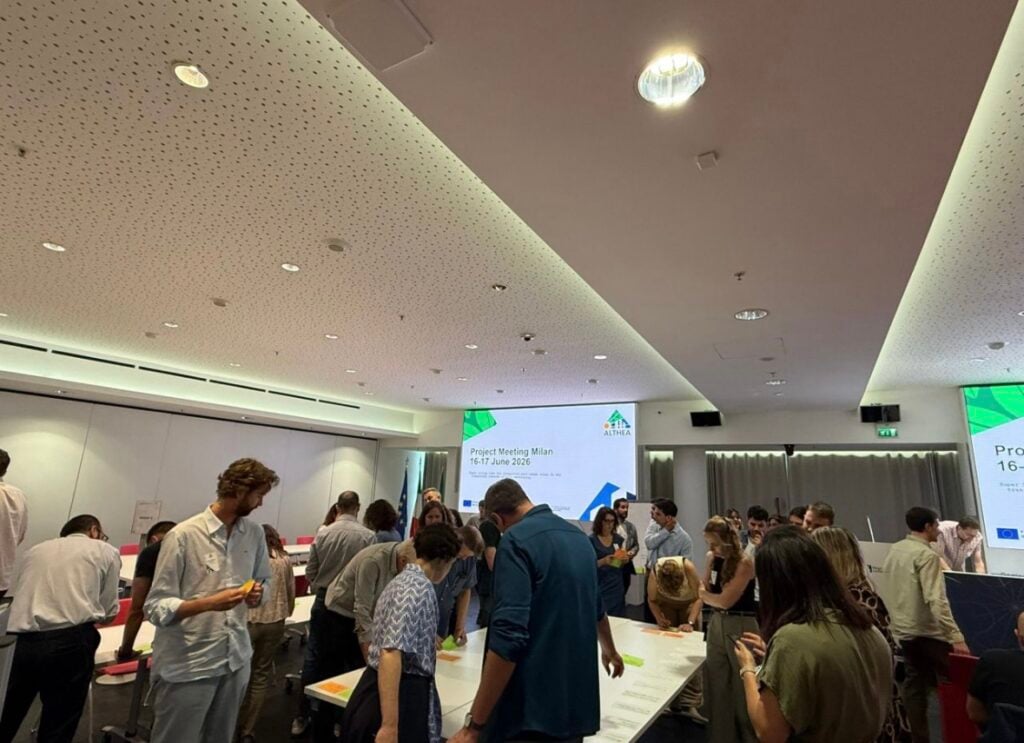
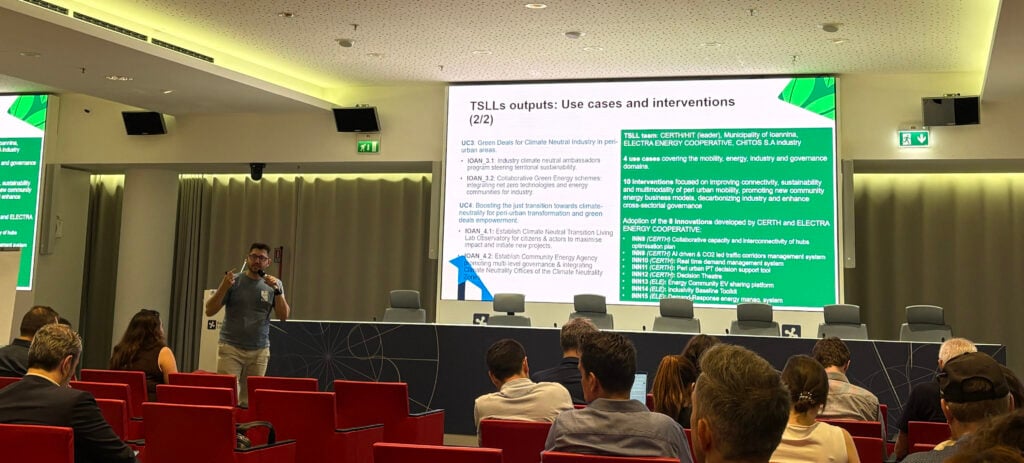
With the methodological foundations in place and innovations maturing, the focus of the Milan meeting naturally shifted towards implementation. Across the five Transition Super Living Labs, partners demonstrated how a shared framework is being translated into locally tailored actions that respond to the specific needs of each territory.
In the Milan Metropolitan Region, implementation focuses on strengthening governance and supporting the decarbonisation of industrial and logistics ecosystems. Alicante–Elche is combining sustainable mobility, tourism management and local energy communities to respond to the needs of a fast-growing and highly seasonal territory. Lisbon is advancing cycling infrastructure, greener logistics and renewable energy planning, while Antwerp–Rotterdam is developing innovative mobility solutions in one of Europe’s largest industrial and port regions. In Epirus–Ioannina, partners are integrating mobility, community energy and governance innovations to strengthen regional connectivity and support a just transition.
Despite these different priorities, partners identified remarkably similar challenges. Discussions repeatedly highlighted the need to improve data sharing and interoperability, strengthen stakeholder engagement, coordinate governance across administrative boundaries and develop meaningful indicators capable of capturing systemic change. Rather than being viewed as obstacles, these common challenges became opportunities for learning. By comparing experiences across territories, partners identified practical solutions, exchanged lessons learned and explored approaches that could strengthen implementation elsewhere.
Recognising that systemic transformation must also be measurable, partners discussed the development of a common evaluation framework combining quantitative indicators, such as emission reductions and modal shift, with qualitative dimensions including governance, stakeholder collaboration and implementation processes. Together, these will help capture not only technological progress but also the broader territorial transformations generated by the TSLL approach.
The exchange of experiences extended beyond the meeting room with a visit to the CIM Novara Intermodal Freight Village, one of Italy’s leading logistics platforms and a strategic node within the European TEN-T transport network. Located at the intersection of major European freight corridors, the freight village illustrates the strategic role that peri-urban logistics ecosystems play in supporting both economic competitiveness and Europe’s climate ambitions.
Participants explored how intermodal logistics, the seamless integration of rail and road freight transport, helps shift freight from road to rail, reducing greenhouse gas emissions, relieving road congestion and improving the efficiency of European supply chains. The visit also showcased how sustainability extends beyond transport itself, with investments in renewable energy production through 5 MW of rooftop photovoltaic installations, digitalisation of terminal operations, automated gate management and real-time data sharing. Bringing together logistics, technology, renewable energy and governance within one operational ecosystem, Novara provided a concrete illustration of the type of systemic, real-life environment that the TSLL methodology seeks to support in accelerating climate-neutral transitions.
Another defining moment of the Milan meeting was the exchange between the five Transition Super Living Labs and the three replicator regions. Before discussing replication, the replicator regions shared their own climate ambitions, governance approaches and territorial challenges, demonstrating that knowledge flows in both directions. While the TSLLs contribute experience from implementing innovations in real-life settings, the replicator regions bring complementary expertise, governance models and territorial perspectives that enrich the project’s collective learning.
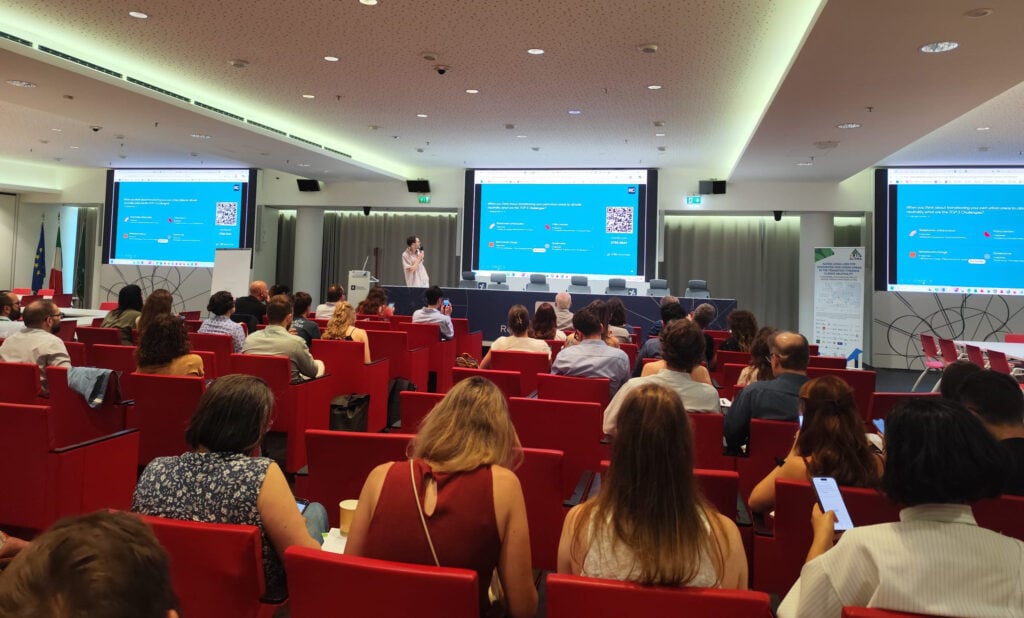
These exchanges continued during an interactive matchmaking session, where the TSLLs and replicator regions explored common priorities, complementary expertise and opportunities for future collaboration. Rather than approaching replication as the transfer of ready-made solutions, partners emphasised the importance of adapting innovations to different territorial realities while learning from each other’s successes and challenges. Stakeholder engagement, governance, sustainable mobility, renewable energy systems and data-driven decision-making emerged as common priorities across all participating regions.
The matchmaking session also marked the beginning of ALTHEA’s Mutual Learning Programme, which will accompany the project throughout its duration. Through thematic workshops, peer-learning activities and collaborative exchanges, TSLLs and replicator regions will continue learning from one another, ensuring that knowledge is continuously refined, adapted and shared.
ALTHEA’s ambition extends beyond replication and the consortium itself. The project will actively engage with sister projects, European initiatives and networks, including the Mission Cities initiative, NetZeroCities, CIVITAS and the wider Living Lab community, to maximise the uptake and long-term impact of its results. Joint events, mutual learning sessions, communication activities and knowledge-sharing initiatives will help ensure that lessons learned reach a much broader audience and contribute to scaling successful approaches across Europe’s cities and regions.
The Milan meeting marked an important transition for ALTHEA – from laying the foundations to putting systemic innovation into practice. More importantly, it demonstrated how regional Living Labs can create the collaborative environments needed to tackle complex climate challenges that extend beyond city boundaries.
By combining experimentation, stakeholder engagement, governance innovation and mutual learning, ALTHEA demonstrates how Transition Super Living Labs can accelerate climate-neutral transitions while strengthening cooperation between cities and their surrounding territories. As implementation advances, the project will continue transforming local experiences into shared European knowledge, contributing to stronger regional innovation ecosystems and supporting the wider adoption of the TSLL approach across Europe.
Climate neutrality does not end at city boundaries – and neither should collaboration.
The article was written by Mariem Chakroun, Project Manager at ENoLL
Stay connected and inspired! Subscribe to our newsletter for the latest updates, insights, and innovations from our global community of Living Labs.