When a municipality sets out to make its city happy, innovation tends to follow. Since 2011, Başakşehir Living Lab (BLL) has been doing precisely that, transforming a fast-growing district of Istanbul into one of Turkey’s most active urban innovation ecosystems, and earning its place among the most recognised Living Labs in the European Network of Living Labs (ENoLL).
Ömer Onur, Managing Director of BLL, reflects on more than a decade of co-creation, pilot testing, and hard-won lessons, from wearable gloves adopted by automotive manufacturers to smart rubbish bins embedded beneath city streets.
The story begins in 2011, when the Mayor of Başakşehir made a deliberate choice. Rather than building a technology park, which would have involved too many stakeholders and layers of government, he opted for a Living Lab model that could remain agile, municipally anchored, and citizen-facing.
“The mayor wanted something under his management,” Ömer explains. “A technology park would have too many stakeholders, especially from the government side. With a Living Lab, he could manage the concept himself.”
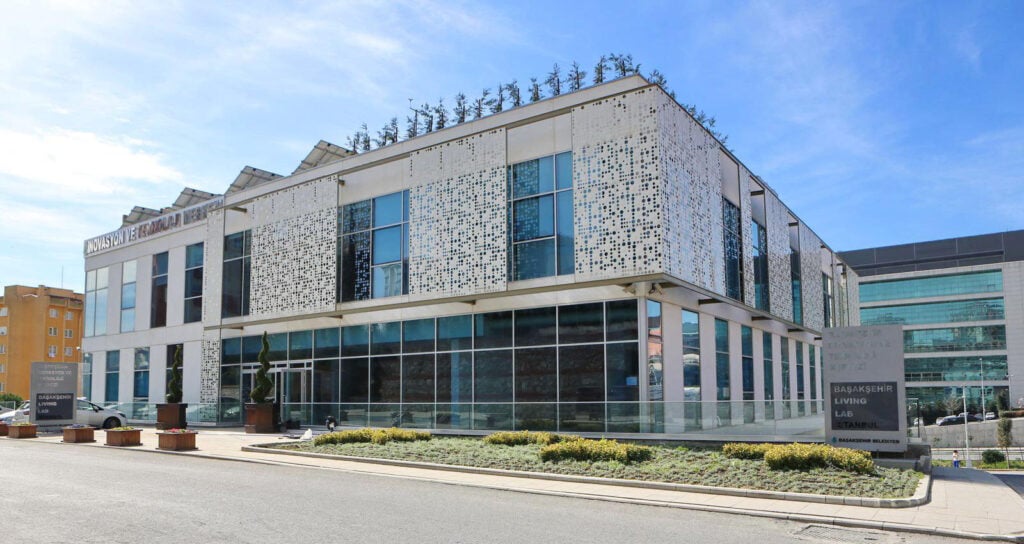
With guidance from an experienced Living Lab consultant, Başakşehir became an ENoLL member in May 2012. By early 2014, the lab moved into its own purpose-built home: a 3,800 m² LEED Gold Certified green building that houses incubation spaces, electronic labs, 3D prototyping facilities, a YouTube production studio, training rooms, and meeting spaces.
From the outset, BLL was designed around three pillars: facilitating pilot testing for innovators, providing free technology training to citizens, and building connections with the organised industrial district of IOSB[1], which hosts more than 30,000 SMEs. The quadruple helix[2] was present from day one, with Bahçeşehir University sitting on the founding board alongside technology companies, entrepreneurs, and the municipality itself. At the moment, BLL has around 35 partners which are involved in the activities of the center.
Asked to define a Living Lab from his own experience, Ömer does not reach for abstract frameworks. For him, the answer is concrete and ranked.
“The first thing on the list is creating pilot testing environments for innovations. Our doors are open to everybody. If they have a product they would like to test and we have the means to co-create that environment, we do it.”
The second thing is co-creation itself: bringing together the right stakeholders, whether schools, universities, or industry, to develop ideas collaboratively. Beyond those two, Ömer identifies ecosystem building as the longer-term work that distinguishes BLL from more transactional incubators.
“We try to grow the innovation ecosystem through competitions, communications, and partnerships. We send newsletters to our ecosystem. We build relationships. Some Living Labs don’t do this. We see it as part of what we are.”
Since 2014, BLL has supported more than 150 startups and projects. Around 10 to 15 of those have turned into genuinely successful businesses. The ones Ömer cites most readily share a common quality: they solved a real problem, for a real user, in a real place.
Apsiyon is perhaps the most widely felt. Developed as a property management platform and tested at a residential site of around 2,000 inhabitants in Başakşehir, it is now used in more than 21,000 properties across Turkey. Ömer adds a personal note: “The apartment I own, they use this platform. I’m still using it.”
The Smart Rubbish Collection System (ACTS), co-created in 2014, is now operational with over 700 underground collection points across the city. By optimising truck routes and removing bins from public view, the system cut collection costs by 50% and reduced carbon emissions. Construction rules in Başakşehir now require one smart container for every 100 households in new developments.
Atık Nakit, a recyclable waste management application introduced in 2018, took the environmental mission further. By 2023, the app was operating in 80% of the city’s residential sites and had collected 28,915 tonnes of recyclable material, including paper equivalent to 140,498 trees. Per-household dumped waste dropped from 1.12 kg in 2018 to 0.77 kg in 2022. The solution is now used in 12 cities across Turkey.
Visiosoft, an AI-powered mapping company, used Başakşehir’s streets as a test environment to build a system that tracks commercial signage and reports changes to city administrators. After implementation, the municipality’s signage tax revenues increased by 20% annually. The city subsequently became an investor in the startup.
Thread in Motion developed wearable sensor gloves to prevent automotive assembly errors. After being matched with angel investors through BLL and testing their product with Mercedes-Benz Turkey, the company grew to the point where almost all major automotive manufacturers in Turkey now use their technology.
SmartLabs, a digital signage management platform tested within BLL itself, replaced the municipality’s traditional third-party media services in 2018. The startup has since grown internationally and is now building its own factory to manufacture smart display boards.
Ömer is direct about the failure rate. Of the more than 150 projects BLL has worked with, around 85% did not succeed.
“The biggest failure is on the marketing side,” he says. “They can produce products or platforms, but when it comes to marketing and sales, our Living Lab is not commercially oriented. Most Living Labs are not commercially minded. Unless entrepreneurs find partners who can support them financially and in marketing, they generally fail.”
It is a pattern recognised across the ENoLL network. Many Living Labs excel at generating ideas and validating prototypes in real environments, but in many ways, the commercialisation becomes the defining challenge of the Living Lab model at scale.
The Mobile Health Station (Globsis), developed in 2014, illustrates how a technically impressive product can still fall short. The compact briefcase device measured up to 30 health parameters from a single drop of blood and transmitted results to a mobile phone within five minutes. The municipality was its first buyer, equipping mobile health minibuses with the units. More than 50,000 people used the system over three years.
But a disagreement over data ownership, as the municipality wanted access to the health data it had helped generate, proved unresolvable, and the startup could not sustain itself financially once that impasse set in. “It was a success story but a failed attempt,” Ömer says. “We couldn’t create a proper business model. Because we couldn’t sustain it financially, the startup ran out of money.”
The structural challenge is a familiar one for urban Living Labs operating in emerging markets. Seed funding is scarce. Angel investment is limited. Larger Venture Capitals (VC) tend to favour bigger projects, and software entrepreneurs with strong technical skills often lack the commercial instincts needed to find and hold a market.
“After a certain point, they find it difficult to sustain themselves, and then these developers start working for others as outsourced programmers,” Ömer observes. “That is the most common ending.”
What the Living Lab approach offers, in Ömer’s view, is risk reduction before commitments become costly. BLL’s testing process moves through defined stages: idea verification, stakeholder workshops, prototype events, and structured real-environment testing with agreed feedback collection procedures and defined timeframes.
This rigour is what turns a Living Lab into something more than a co-working space. It is a method for de-risking investment, for both the city and the entrepreneur.
The MetaBuilding Labs project, a Horizon Europe initiative in which BLL is serving as a pilot city, illustrates the model at EU scale. Two materials for building envelopment, Onyx and Adiliance, are currently being tested on the BLL building itself. “The result might create impact on the SMEs developing construction products,” Ömer notes, “but we will have to see the figures and reports. That is how the process works.”
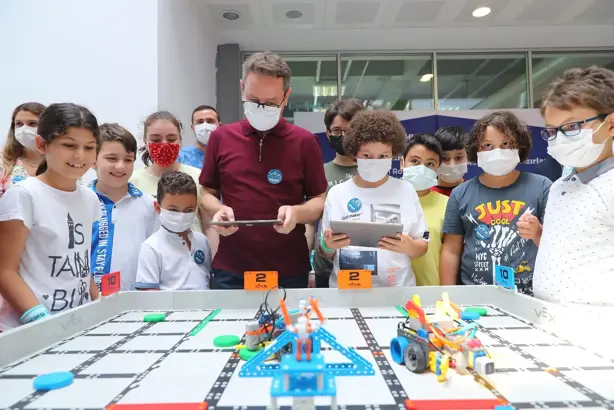
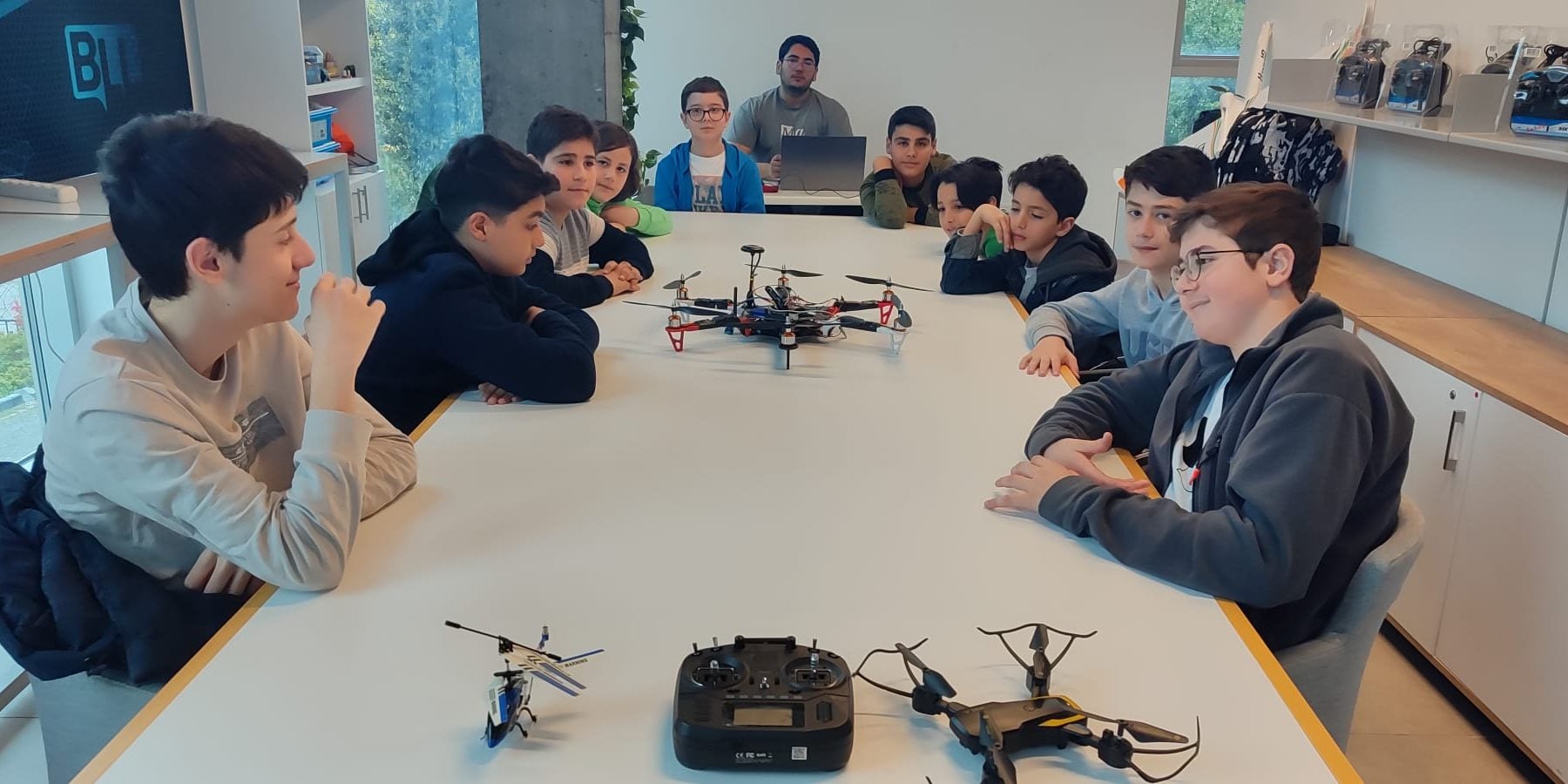
BLL’s impact is not limited to the startups it incubates. Since 2014, the lab has delivered more than 1.000 training sessions to over 18,000 (over 200.000 including online trainings) people aged ten and above, covering everything from programming, drone technology and 3D modelling to AI training and robotics with Lego Mindstorm kits.
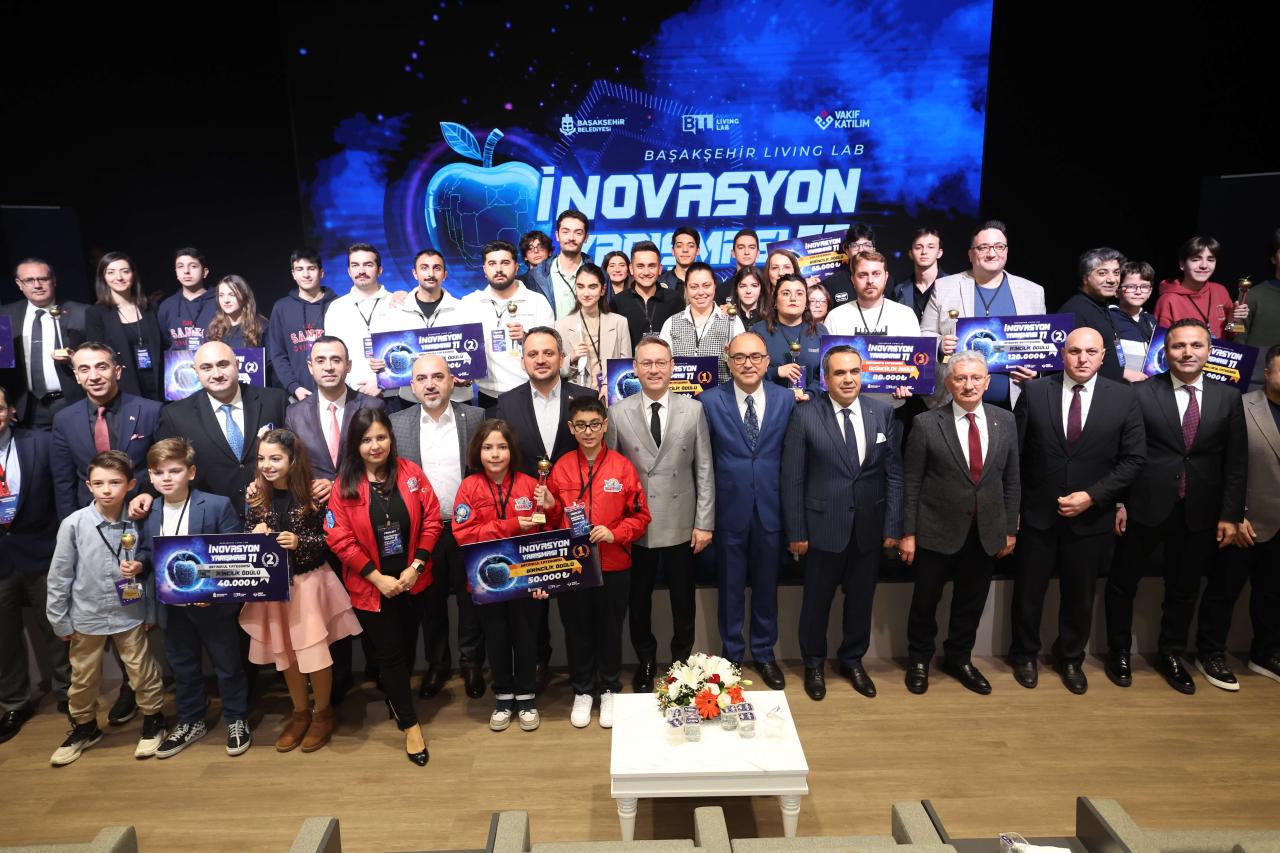
Its annual Innovation Competition for students and teachers has grown from 182 applications from 24 cities in 2014 to 1200 applications from 60 of Turkey’s 81 provinces in 2024. The Entrepreneurs Days programme, running since 2015, has attracted nearly 800 project applications, with around 306 finalists presenting to investors and potential partners.
The numbers that come back from participants tell their own story. After taking part in the Innovation Competition, more than nine in ten people reported feeling more motivated to pursue innovation, more engaged with their school work, and more aware of innovation as a career path. For many, it is the first time anyone has asked them to build something, test it, and present it to a real audience.
These are not incidental outputs. They are, in Ömer’s framing, the long-term infrastructure of an innovation ecosystem: a growing population of people who have been exposed to new technologies, tested their own ideas, and seen that Başakşehir is a place where that kind of ambition is taken seriously.
Başakşehir joined ENoLL almost immediately after the lab was founded, a decision Ömer describes as strategic rather than financial.
“The main reason was to have a gateway to other Living Labs and to Europe. To find new concepts, to show our own developments, and to become part of a network. When you become part of a bigger brand, it brings more substance to what you are doing.”
Over time, the relationship deepened. BLL has been represented on the ENoLL Council since 2015, and Ömer has served as treasurer of ENoLL since 2019. The network has also been a channel for accessing Horizon Europe funding, with BLL participating in projects including UNaLab, MetaBuilding Labs, DUT Multigination, and CoeNerBuild.
“Being part of a network also provides flexibility,” Ömer adds. “Whenever I am looking for a specific type of innovation, I can reach out and ask to be connected with a Living Lab working in that area. Your outreach becomes much easier, especially when you are developing solutions.”
The monetary value created through BLL since 2014 is estimated at between 50 and 100 million euros, counting the market value of successful startups, cost savings for the municipality, and broader economic impact in the city.
As BLL moves into its second decade, Ömer sees one gap to address: the transition from pilot testing to commercial scale. BLL currently supports innovations from roughly TRL 3 up to TRL 8 (early proof-of-concept through validated real-environment prototype), taking products from early concept through real-environment validation. What comes after, finding investors, reaching new markets, sustaining revenue growth, remains outside the lab’s current scope.
“In the future, maybe we can add the commercialisation stage. But that is a different ballgame. You need people with strong relationships with financial institutions and VCs. Maybe this becomes part of our ecosystem in the long run.”
For now, the lab’s strength remains what it has always been: the ability to open its doors, bring together the right people, and turn an idea into something the city of Başakşehir can actually live with.
“Our concept is to continue and grow this ecosystem,” Ömer says. “Not to create a project, run it while the funding lasts, and then let the Living Lab die. We are here to stay.”
[1] IOSB (İkitellib Organize Sanayi Bölgesi) is an organised industrial zone in Istanbul, housing more than 30,000 small and medium enterprises, primarily in electronics, manufacturing, and technology sectors. Its proximity to Başakşehir makes it a key industry partner for BLL’s pilot testing and commercialisation activities.
[2] The quadruple helix is a collaborative innovation model that brings together academia, industry, government, and civil society (citizens and end users) as equal partners in the co-creation process.
The interview has been taken by Andrada Barață, Head of Communications at ENoLL with Ömer Onur, Managing Director of BLL.
Stay connected and inspired! Subscribe to our newsletter for the latest updates, insights, and innovations from our global community of Living Labs.